
Guide · Commercial kitchens
Kitchen exhaust odour complaints: what causes them and how they are solved
19 November 2026
For restaurants in mixed-use buildings, odour complaints can threaten your licence and your neighbours' goodwill. Understanding the cause is the first step.
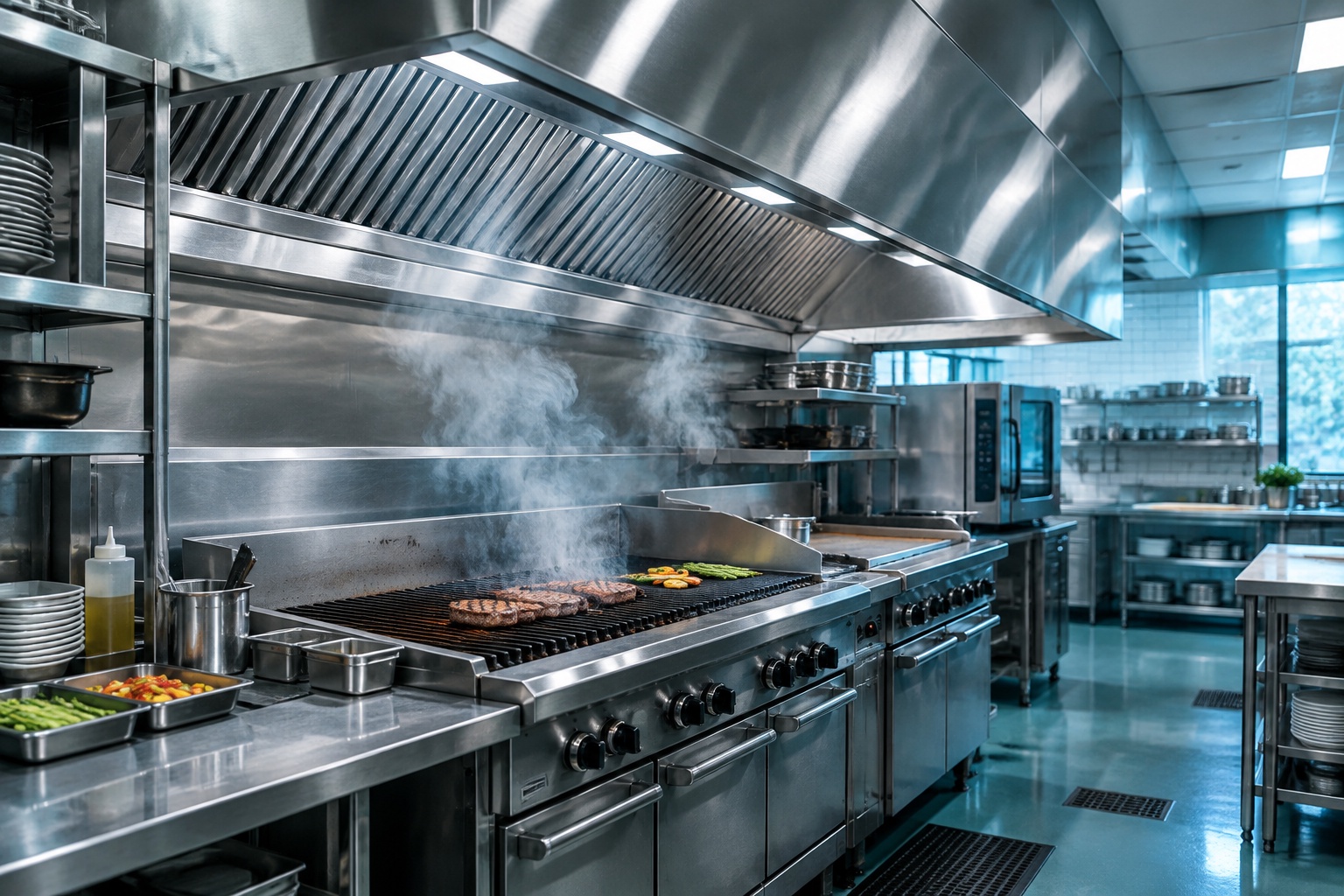
Cooking odour is a mix of smoke, grease aerosols and gases. Where it ends up depends on your cooking style, your hood and where the exhaust discharges.
Common causes
- Discharge position. Exhausts that release near windows, terraces or air intakes of other units.
- Cooking style. Charcoal grills, tandoors and wok cooking produce far more smoke and odour than steaming or baking.
- Under-performing filtration. Grease filters alone do not remove odour; worn or overloaded odour control units lose effectiveness.
How it is solved
The right answer is usually a combination: improving capture at the hood, removing grease and smoke particles, then treating odour gases — for example with electrostatic precipitators, UV, or activated carbon stages — sized for the kitchen's actual output.
Start with a survey
A site survey of the hood, ductwork, discharge point and complaint locations shows which stage is failing before any equipment is purchased.
Have a similar problem?
Use Help Me Find a Solution for a personalised outline, or explore our solutions.